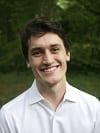
Dr. Francisco Delgado (2016-2018)


Dr. Francisco Delgado
Post-Doc
Biomedical Engineering
fdelgado@ufl.edu
Neural interfaces
[expand title=”Read more”]Francisco received his B.S. in biomedical engineering with a minor in mechanical systems design from Florida International University in Miami. After completion of his degree he moved to Gainesville to begin his doctoral research. In 2010 he joined the Epilepsy Research Lab under the leadership of Dr. Paul R. Carney; here Francisco garnered experience in the field of central nervous disorders and the tools and techniques used to study and treat them. During his tenure in the Epilepsy research lab he was awarded a prestigious CTSI TL1 fellowship, which supported his study of nanotechnological methods for the treatment of epilepsy. His work focused on the interplay of drug delivery technologies and disease, and he wrote his dissertation on the influence of tissue structure and delivery environments on treatment strategies for neurological diseases.

After graduating with his PhD, Francisco joined the Neural Prosthetics Research Lab under Dr. Kevin Otto as a postdoctoral fellow. His current research includes novel methods of stimulating and recording in the peripheral nervous system in vivo, and understanding the outcomes of these methods as they pertain to the restoration of function or improvement of learning. In the future, he hopes to extend this work to create novel technologies to interface with neurological tissues to treat disease, enhance function, and develop a better understanding of how the brain functions.[/expand]
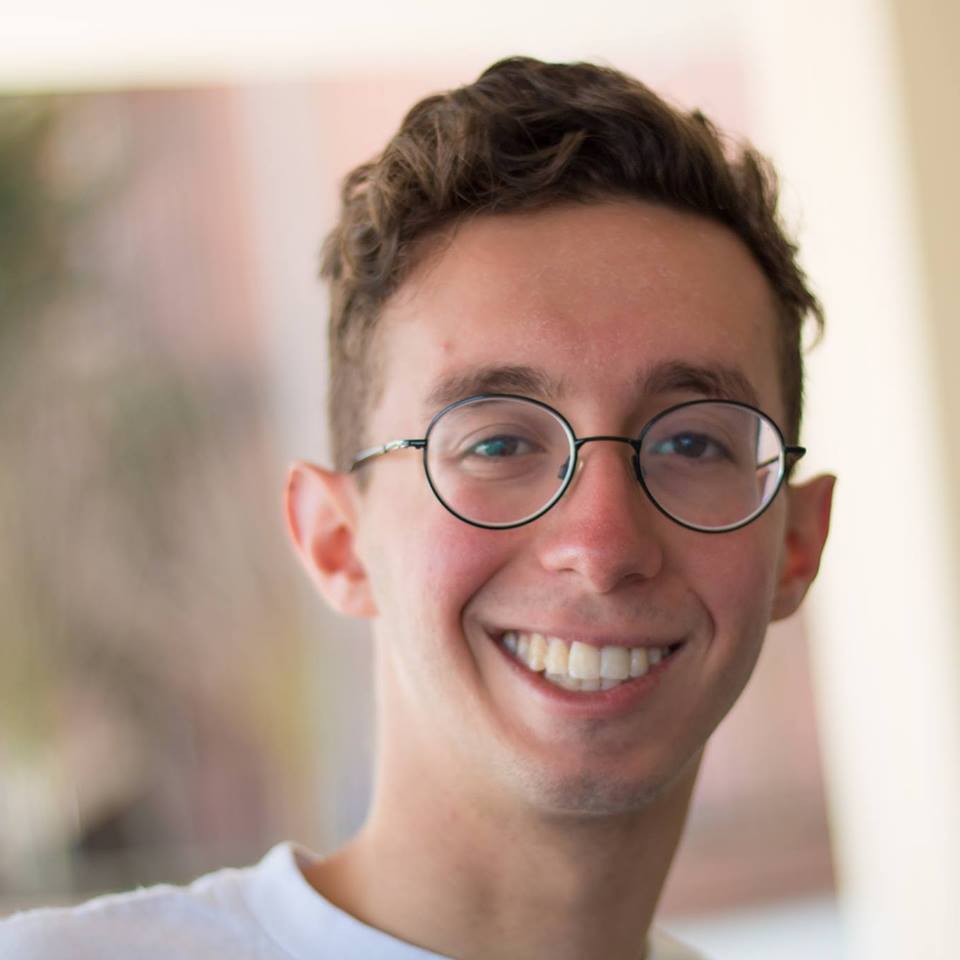

Avi Matarasso

small_aviAvi Matarasso
Chemical Engineering
avimatarasso@ufl.edu

Avi is a 3rd year Chemical Engineering student with an Electrical Engineering minor. Avi is interested in pursuing a Ph.D. in Biomedical Engineering, and is currently researching histology aspects of TEENI electrode implants. His research interests include brain-computer and peripheral interfaces, electrochemical brain signals, and their interactions with debilitating brain diseases and brain disorders.

Mary Regan

small_maryprofileMary Regan
Agricultural and Biological Engineering
mregan1014@ufl.edu
[expand title=”Read more”] Mary is currently a 4th year student in the Biological Engineering department here at UF and is planning on pursuing a PhD in biomedical Engineering after graduating. She is specifically interested in using nanoparticles for drug delivery and disease detection, but is currently focused on learning about immunohistochemistry, brain biology, and general research methodology.[/expand]

Seth Currlin (2015-2021)

small_sethprofileSeth Currlin
Ph.D. student
Interdisciplinary Science with specialization in Neuroscience
scurrlin@ufl.edu
Neural implants and neural stimulation

Seth earned his B.S. (2011) in Biology and M.S. (2013) in Molecular Genetics and Microbiology at the University of Florida. Master’s work focused on metabolic peptide influence upon taste modulation and related neural pathways with Dr. C.D. Dotson and Dr. Sergei Zolotukhin. In 2015 Seth was accepted to the University of Florida’s Interdisciplinary Science Ph.D. program (IDP) and will specialize in Neuroscience.

Dr. James B. Graham (2016-2017)


james-graham-100x133
Dr. James B. Graham
Post-Doc
Biomedical Science
jbgraham@ufl.edu
Neural tissue-device interfaces
[expand title=”Read more”]Dr. James B. Graham received his BA degree in biology from La Salle University in 1996 and his PhD degree in biomedical science with a double concentration in neuroscience and clinical translational science from the University of Florida in 2015.

From 2001 to 2010, he was a senior biological scientist at the University of Florida where he focused on various methods to analyze functional recovery in animal models of peripheral nerve injury. During his tenure in the department of pediatric neurology, he published several highly cited reports in well established peer reviewed scientific journals, was awarded a patent from the University of Florida Office of Technology and Licensing with his co inventor and mentor, Dr. David Muir, and was a vital leader and innovator in the development of several commercialized peripheral nerve regenerative components.

He is currently a Post-Doctoral Associate in the Neuro Prostheses Research Laboratory under the mentorship of Dr. Kevin J. Otto where his work focuses on developing and analyzing peripheral nerve electrical interfaces for sensory and motor applications of prosthetic devices. [/expand]

Janak Gaire (2012-2018)

gaireDr. Janak Gaire
Post-Doc
Neuroscience
jgaire@ufl.edu
Tissue-device interfaces and neural implants
[expand title=”Read more”] Janak completed his B.S. in Biology, with a minor in chemistry from the University of North Texas in 2010. For a year, he worked with Dr. Guenter W. Gross at Center for Network Neuroscience to develop ways to increase the durability of microelectrode array plate. Currently, he is pursuing a PhD in Department of Neuroscience at University of Florida (UF). Before transferring to UF in August 2014, he joined the Neuroprostheses Research Laboratory at Purdue University in summer of 2012. He is interested in improving the functional longevity of the implanted devices and currently working on evaluating tissue response to brain-implanted devices.

Research Abstract:

Intracortical microelectrode devices provide a brain machine interface capable of targeting very small populations of neurons with a potential to treat many neurological disorders. These penetrating devices generally perform well for a short duration but fail to record or stimulate reliably for chronic time putatively due to reactive tissue response (RTR). The loss of chronic functional reliability is a major hurdle for successful clinical implementation. I am interested in understanding the mechanisms underlying device failure. My research focuses on employing novel techniques and models to investigate biological mechanisms underlying device failure. I have been involved in developing novel imaging techniques (both in situ and in vivo imaging techniques) and mouse models to evaluate biological changes surrounding the implanted devices.

Download Janak Gaire’s Curriculum Vitae
[/expand]

Jake Rieke (2015-2016)

jake-rieke-100x133Jake Rieke 
M.S. Student
Biomedical Engineering
jrieke@ufl.edu
[expand title=”Read more”]Jake received a B.S. in biomedical engineering at the University of Florida with a specialization in neural engineering. He has previously worked on analysis of EEG and fMRI signals for brain-computer interface (BCI) applications. Currently, He is pursuing a M.S. in biomedical engineering from the University of Florida. His research interests include neuroprosthetics and exploring interactions at the tissue-device interface.
[/expand]

Matthew McDermott (2010-2017)

mcdermottMatthew McDermott
Ph.D. student
Biomedical Engineering
m.mcdermott1984@ufl.edu
Drug delivery, and brain-machine interfaces
[expand title=”Read more”] Matthew completed his B.S. in Chemistry at Purdue University in 2007, while also receiving a minor in Biology. He worked for two years at Akina Inc. where he developed homologous PLGA micro and nano particles for the use in sustained release drug therapies. Currently, he is pursuing a PhD in Biomedical Engineering at Purdue University, in the Biological Sciences Doctoral Track through the Biomedical Engineering Department. He joined the NPR Lab in the fall of 2010 researching polymer coatings and drug delivery across the brain machine interface.

Research Abstract:

After implantation of microelectrode arrays (MEAs) into the brain, the foreign body response (FBR) is activated, ultimately leading to microglial activation, astrocyte migration, and inflammation. This response is expected to have an effect upon device performance, decreasing signal to noise and increasing impedance. Research in the field has been conducted to mitigate this response, either by drug delivery or altering the MEA brain interface. For these methods to work, drug release must be controlled, without “burst release”, and the coating must not drastically increase the device footprint. Tetramethyl orthosilicate shows promise in that regard. Deposition of TMOS does not negatively MEA performance1,2 and has been shown capable of controlled release2. However, the functionality of this polymer to mitigate the FBR depends on the ability to tune drug delivery without increasing the device footprint. In this study, novel coating paradigms were used to ascertain the ability of TMOS for tunable delivery, and the effect of these multiple coatings upon device footprint.

Download Matthew McDermott’s Curriculum Vitae[/expand]

Hugh Lee (2012-2016)

hl-100x133Heui Chang (Hugh) Lee
Post-Doc
Biomedical Engineering
hclee83@ufl.edu
Neural implants, tissue-device interfaces, and neurostimulation
[expand title=”Read more”] Hugh received a BS in Hanyang University and M.S. in Seoul National University, both in electrical engineering. While he was working at KIST in Man-Machine Interface lab for one and a half year, he developed his interest in neural engineering and decided to continue study in biomedical engineering. Currently, he is a PhD student in biomedical engineering at Purdue University. He joined Neuroprostheses Research Lab in 2012 and conducted researchin electrophysiology recording via neural implants and the mechanism of its failure.

Research Abstract:

The long-term performance of brain implanted microelectrode arrays is hampered by a series of inflammatory tissue responses. The consequence of the tissue reaction is formation of glial scar and permeabilizing blood-brain barrier (BBB) around the vicinity of the electrode, causing neuronal degeneration and impeding the electrical signal conduction. My study aims to investigate mechanical intervention strategies to mitigate the effect of tissue response and prolong the lifetime of electrodes. In particular, I am looking at novel site geometry and mechanically compliant material under recording and microstimulation conditions.

[/expand]

Michael Leathers

Himanshi Desai

Himanshi was awarded First Place at 2010 Purdue University College of Science Undergraduate Poster Competition (primary author: H Desai).